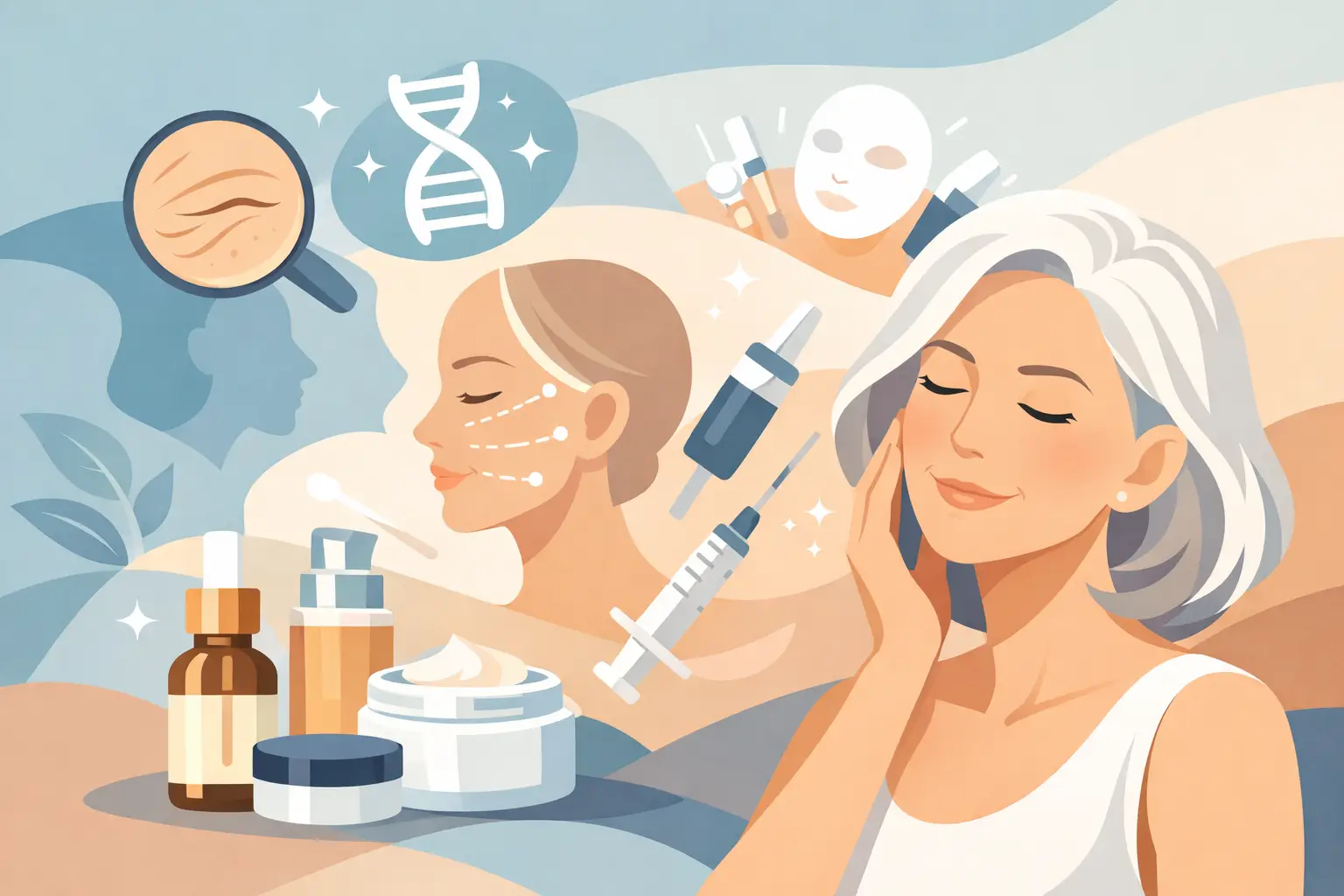
By your 50s, the mirror usually shows more than one change at once. Skin may feel thinner, less firm and drier than it once did, while volume loss, deeper lines and a softer jawline can all appear together. That is why the best anti-ageing treatments for 50s are rarely about one quick fix. The most effective approach is personalised, layered and designed to refresh the face without losing what makes it yours.
This decade often calls for a more strategic plan than earlier years. Hormonal shifts can affect collagen production, skin texture and hydration, and treatments that worked beautifully in your 30s or 40s may no longer be enough on their own. The goal is not to chase a different face. It is to restore support, improve skin quality and achieve natural-looking results that still feel elegant and believable.
In your 50s, ageing becomes less about a single wrinkle and more about structure. Collagen and elastin decline further, so skin does not bounce back in the same way. Fat pads in the face can reduce and shift, creating hollows through the cheeks, under-eyes and temples, while the lower face may look heavier due to laxity and loss of definition.
Skin quality also plays a bigger role. Many clients notice dullness, crepey texture, enlarged pores or uneven pigmentation from years of sun exposure. This is why treatment plans at this stage often combine skin rejuvenation with lift, volume support and wrinkle softening. If you only treat one concern, the overall result can look incomplete.
The best anti-ageing treatments for 50s tend to fall into three groups: treatments that relax lines, treatments that restore support and treatments that improve skin quality. The right combination depends on your anatomy, skin condition, lifestyle and how subtle or transformative you want the result to be.
Anti-wrinkle injections remain one of the most effective options for forehead lines, frown lines and crow’s feet. In your 50s, they can be especially useful when repeated facial movement has made lines more established.
That said, technique matters more than ever. Over-treating the upper face can flatten expression or create an imbalance if the lower face has more laxity. A medically trained practitioner will assess how much movement to reduce while keeping the face animated and natural. For many clients, a softer approach gives the most polished result.
Volume loss becomes a key issue in this decade, particularly through the cheeks, temples, marionette area and around the mouth. Dermal fillers can restore structure where support has been lost, helping the face look fresher and less tired.
The most successful filler work in your 50s is rarely about adding obvious volume. It is about strategic placement. Supporting the mid-face can subtly improve the lower face, while careful treatment around the mouth can soften shadows without making features look heavy. There is a trade-off here: filler can do excellent work for contour and support, but it cannot replace skin tightening when laxity is the dominant concern.
If your skin looks dull, dehydrated or crepey, skin boosters can make a significant difference. These injectable treatments focus less on shape and more on skin quality, helping to improve hydration, smoothness and luminosity.
For many clients in their 50s, skin boosters are one of the most underrated options because they create a fresher finish without changing facial identity. They are particularly helpful for delicate areas such as the cheeks, lower face and sometimes the under-eye region, depending on suitability.
Microneedling is a strong option when texture, fine lines, enlarged pores or mild scarring are concerns. By stimulating the skin’s repair response, it encourages collagen production over time and can help the skin feel smoother and firmer.
Results are usually cumulative rather than instant, which suits clients who want gradual improvement. It is often best viewed as part of a wider skin health plan rather than a standalone answer to deeper folds or sagging.
When jowling, reduced firmness or a heavier lower face are becoming more noticeable, HIFU can be an excellent non-surgical treatment to consider. It targets deeper layers of tissue to stimulate collagen and create a lifting effect over time.
This can be particularly useful for clients who want more definition through the jawline or neck but are not ready for surgery. The important nuance is that HIFU works best for mild to moderate laxity. If volume loss is the real problem, filler or skin boosters may be more helpful. If laxity is more advanced, expectations need to be realistic.
Sun damage often becomes more visible in your 50s, especially as the skin’s ability to renew itself slows down. Pigmentation, redness and uneven tone can make the face look older even when lines are not severe.
Targeted skin rejuvenation treatments can help create a clearer, brighter complexion. This is often what makes the biggest visual difference, because fresher skin tone can make the whole face appear more rested. For clients who feel they look tired rather than lined, improving pigmentation can sometimes matter more than treating wrinkles first.
One reason people feel disappointed by aesthetic treatments in their 50s is that they choose a treatment in isolation. A few anti-wrinkle injections may soften the forehead, but they will not address volume loss. Filler may restore support, but it will not correct surface pigmentation. A tightening treatment may lift slightly, but it will not deeply hydrate the skin.
This is why consultation-led planning matters. At Sarah M Aesthetics, bespoke treatment plans are designed around the full picture rather than a single symptom of ageing. For one client, that may mean anti-wrinkle injections with skin boosters. For another, it may be HIFU with microneedling and carefully placed dermal filler. The right answer depends on what is ageing first and what is ageing most.
The best place to start is not with a trend or a celebrity treatment. It is with an honest assessment of your face and skin. Ask what bothers you most. Is it sagging? Tired-looking eyes? Deepening lines? Loss of glow? Uneven tone? Different concerns point to different treatments.
It also helps to think about downtime, budget and how quickly you want results. Injectables can give visible improvement relatively quickly. Collagen-stimulating treatments such as microneedling and HIFU require more patience. Skin rejuvenation may need a course of sessions for best results. There is no universal best treatment, only the best option for your priorities.
A good practitioner will also tell you when not to treat. If a concern is better addressed by skincare, a different technology or a staged approach, that should be part of the conversation. Safety, facial harmony and long-term planning matter far more than doing more treatment than you need.
In premium aesthetics, natural-looking results are not accidental. They come from restraint, anatomical knowledge and careful treatment selection. In your 50s, this usually means softening rather than freezing, supporting rather than overfilling and improving skin quality rather than masking it.
The best result is often when people notice you look well, rested or somehow fresher without being able to pinpoint why. That standard is especially important for clients who want to look polished in professional settings, social events or everyday life without appearing obviously treated.
In-clinic treatments achieve far more when the skin is properly supported at home. In your 50s, medical-grade skincare can help maintain hydration, improve texture and support the results of professional treatments. This does not mean a complicated routine. It means using the right products consistently and adjusting them to suit your skin’s changing needs.
Maintenance also matters. Most non-surgical treatments are not permanent, and the most elegant results usually come from thoughtful upkeep rather than dramatic correction. Smaller, well-timed treatments often look better than waiting until concerns feel advanced.
If you are considering treatment in your 50s, aim for a plan that respects both the science of ageing and the individuality of your face. The most effective choice is rarely the most dramatic one. It is the one that restores confidence, feels like you and is delivered with the level of expertise your skin deserves.